
Modern Solutions for Smart Investors
At SunSecurities, we empower every Nepali investor with the tools, insights, and support needed to make confident financial decisions — from stock trading to long-term wealth growth.
Personalized Investment Support
Our expert advisors guide you through every step — from opening your account to growing your portfolio with confidence and clarity.
Trusted by Thousands
Join a growing community of Nepali investors who rely on SunSecurities for reliable market access, transparent services, and seamless trading experiences.
Fast & Secure Trading
Experience lightning-fast transactions, real-time market data, and top-tier security across all your trading and investment activities.
Everything you need. Made Simple
SEBON & NEPSE Licensed
Fully authorized stock brokerage service provider in Nepal with secure and compliant operations
Online Trading Platform
Trade stocks instantly through user-friendly web and mobile platforms
Real-time Market Data
Access live NEPSE charts, quotes, indices, and market updates without delays
Fast Account Opening
Open your trading, DEMAT, and MeroShare accounts quickly with guided support
Low Brokerage Fees
Competitive, transparent pricing with no hidden charges
Secure & Reliable
Bank-level security and compliance to keep your investments protected
Investor Support
Dedicated customer service for technical help, trading support, and market queries
Research & Insights
Market analysis, company updates, and trading insights powered by experts
Blog Posts
Discover the latest trends, tips, and best practices in modern web development.
View all articles
Kathmandu. Nepal’s insurance companies are increasingly calling for permission to invest a portion of their funds in international markets, as persistently low bank interest rates at home continue to erode returns and pressure profitability. With limited domestic investment instruments and the absence of large-scale infrastructure bonds, insurers argue that overseas exposure has become a necessity rather than a choice.
For years, insurers have parked the bulk of their investments—nearly 80 percent on average—in banks and financial institutions. However, historically low deposit rates have sharply reduced income from fixed deposits, the sector’s primary source of steady returns. Compounding the problem, excess liquidity in the banking system has made banks reluctant to absorb large deposits from insurers, even at lower rates, leaving companies struggling to place funds efficiently.
This pressure is already visible in financial performance. Compared to fiscal year 2080/81, profits of 14 non-life insurance companies declined by nearly 29 percent in 2081/82. Their combined net profit fell from NPR 5.85 billion to just NPR 4.16 billion. Life insurers were not spared either: profits of 14 life insurance companies dropped by 16.24 percent, from NPR 6.51 billion to NPR 5.45 billion over the same period.
While life insurers posted a modest rebound in the first quarter of the current fiscal year 2082/83, the picture remains mixed. According to first-quarter financial statements, 14 life insurers together earned NPR 1.97 billion in profit, a 2.51 percent increase year-on-year. Non-life insurers, however, slipped deeper into trouble, with almost all reporting losses except Prabhu Insurance and National Insurance. Prabhu Insurance posted a 12 percent rise in profit to NPR 63.1 million, while National Insurance swung back into profit with NPR 38.1 million after a loss in the previous year’s first quarter.
Industry officials say the non-life segment is facing a double blow. On one hand, low deposit yields have squeezed investment income; on the other, insurers have had to pay large volumes of claims related to Gen-Z protests, floods, landslides, and other disasters. The combination has significantly weakened balance sheets, intensifying calls for diversification of investment portfolios.
Data from Nepal Insurance Authority underline how concentrated insurers’ investments remain. By the end of the first quarter of 2082/83, non-life insurers had invested NPR 64.87 billion across various sectors, of which NPR 47.48 billion—nearly three-quarters—was locked in fixed deposits at banks and financial institutions. Class ‘A’ commercial banks alone accounted for NPR 41.56 billion, followed by development banks and finance companies.
Non-life insurers have also invested smaller amounts in government securities, listed company shares, bonds, debentures, mutual funds, and infrastructure-related sectors such as hydropower, renewable energy, tourism, roads, transmission lines, education, and health. However, these alternative investments remain marginal compared to bank deposits, limiting their ability to offset falling interest income.
The concentration is even more pronounced among life insurers, whose total investments reached NPR 789.82 billion in the first quarter. Of this, more than NPR 544.87 billion was placed in commercial bank fixed deposits, with additional exposure to development banks, finance companies, and infrastructure banks. Life insurers have also expanded investments in government securities, listed equities, bonds, mutual funds, and real estate, but fixed deposits still dominate their portfolios.
A striking trend is the continued growth of insurers’ deposits in banks despite declining returns. In the first four months of the current fiscal year alone, insurers invested NPR 684.63 billion in bank fixed deposits, up from NPR 623.53 billion during the same period last year. This reflects not confidence in returns, but rather the lack of viable alternatives within Nepal’s financial system.
Insurers argue that allowing limited overseas investment—under clear regulatory caps and safeguards—would help improve returns, spread risk, and expose the sector to global best practices. They say such diversification would ultimately strengthen insurers’ financial health, benefiting policyholders and the broader economy.
Regulators, however, remain cautious, citing concerns over capital flight, foreign exchange risks, and supervisory capacity. Yet with profits under strain and domestic options exhausted, pressure is mounting on policymakers to revisit the rules.
As low interest rates show little sign of reversing in the near term, the debate over international investment is set to intensify. For Nepal’s insurers, the question is no longer whether diversification is desirable, but whether the system can afford to delay it any longer.

Kathmandu. The prolonged freeze on premium-priced initial public offerings (IPOs) has begun to reshape corporate fundraising strategies in Nepal, with several companies abandoning premium pricing and opting instead for issue-at-par offerings. The shift comes as the Nepal Securities Board (SEBON) has not granted approval for premium IPOs for nearly two years, leaving dozens of applications stuck in limbo.
Companies that had applied to issue shares above face value say the regulatory uncertainty has made premium pricing impractical. With approvals nowhere in sight, firms are now prioritizing timely access to capital over valuation upside, even if it means raising funds at a lower price. Market participants say this trend reflects growing frustration with regulatory indecision rather than a lack of investor appetite.
A clear example is Hospital for Advanced Medicine and Surgery Limited (HAMS), which had applied more than two years ago to issue 1.125 million shares at a premium price of NPR 288 per share. After failing to receive approval, the company has now moved forward with a revised plan to issue 2.4 million shares at face value of NPR 100, raising NPR 240 million. HAMS had first submitted its premium IPO application on Poush 6, 2080, but the file remains undecided.
HAMS is not alone. According to SEBON data, at least 11 companies currently have applications pending for premium-priced IPOs. None have received approval, effectively putting the premium IPO route on hold. In total, around 85 companies have applied to issue shares worth more than NPR 56 billion, covering nearly 39 million units, but many of these applications have been awaiting clearance for over two years.
The deadlock persists despite earlier political pressure to resolve the issue. In Jestha last year, the then House of Representatives’ Finance Committee directed the regulator to process premium IPO applications in line with existing laws. However, that instruction has yet to be implemented. Instead, SEBON has cited the need to review and potentially amend regulations governing share registration and issuance.
Since assuming office in Mangsir 2081, SEBON Chair Santosh Narayan Shrestha has formed committees to study regulatory changes, but the amendment process itself has not moved forward. Critics argue that this has effectively prolonged uncertainty, discouraging companies from planning premium issues and slowing capital market activity.
The controversy is rooted partly in decisions made during the tenure of former SEBON chair Ramesh Kumar Hamal, who approved a handful of premium IPOs, most notably that of Himalayan Reinsurance Limited on Kartik 1, 2080. That approval drew scrutiny from parliamentary committees and the Office of the Auditor General, triggering broader questions about valuation practices and regulatory discretion.
Following those concerns, approvals for other premium IPO applicants were effectively halted. Hamal himself was questioned by the Commission for the Investigation of Abuse of Authority (CIAA), and audit bodies flagged irregularities in regulatory changes that shortened the eligibility period for premium IPOs from three years to two—changes critics say benefited select companies.
Market analysts note that the fallout has been significant. By freezing premium IPOs without a clear alternative framework, the regulator has created a bottleneck that undermines both investor confidence and corporate fundraising. Companies that could have raised capital at higher valuations are now either delaying expansion plans or settling for par-value issues.
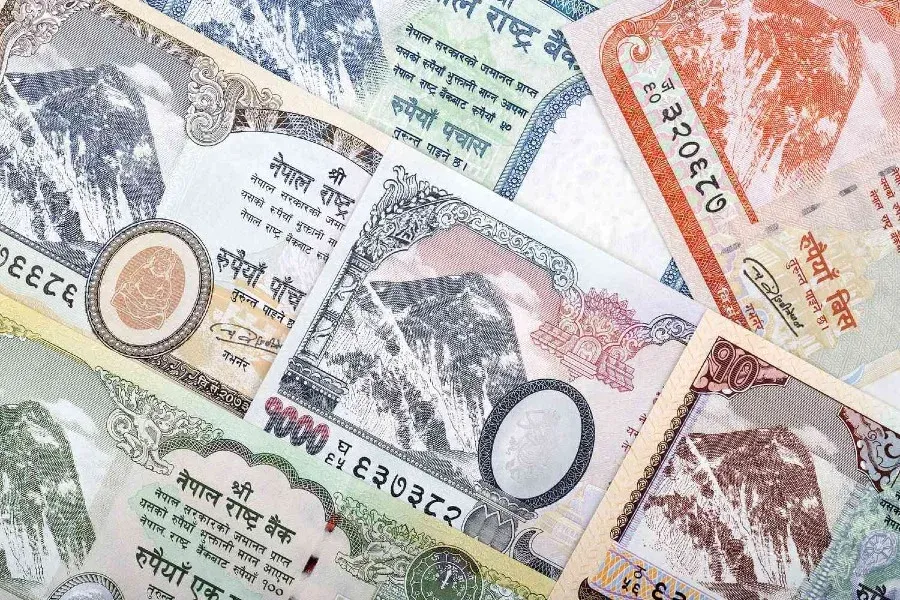
What If the Nepali Rupee and Indian Rupee Are No Longer Pegged?
Aug 5, 2025
By Nepse Alpha
By Rohan Maharjan & Simran Sainju , SAIM College
The relationship between India and Nepal goes far beyond that of ordinary neighbors, it is more like that of brothers, bound by shared history, culture, and deep-rooted ties. The open border between the two nations is a rare example of trust and cooperation in the South Asian region, allowing citizens to move freely across boundaries without visas or passports. But apart from these visible links, there’s another important connection that doesn’t get much attention: the currency peg. Since 1993, the Nepalese Rupee (NPR) has been fixed at 1.60 for every 1 Indian Rupee (INR). This means the value of Nepal’s currency is closely tied to India’s. It’s a system that helps maintain stability in Nepal’s economy.
Still, it’s worth asking what if this peg didn’t exist? What would happen if Nepal decided to remove the Indian Rupee as its anchor? This question opens up a lot of discussion about the possible risks and benefits for the country’s economy.
Why Does the Peg Exist?
Before understanding the reasons behind Nepal’s current currency peg, it's important to take a look back at the historical journey that shaped it. Between 1857 and 1930, the Nepalese Rupee was fixed at a rate of 1.28 per Indian Rupee. However, in the decades that followed, the value of the Nepali currency saw multiple fluctuations.
During World War II, the exchange rate shifted dramatically, falling to NPR 1.6 = INR 1 at one point, and rising to as much as NPR 0.6 = INR 1. In 1952, the government of Nepal made an official move to peg the Nepalese rupee at 1.28 per Indian Rupee once again. This was followed by a series of minor revaluations between 1955 and 1957, where the rate gradually appreciated from NPR 1.755 = INR 1 to NPR 1.305 = INR 1.
In 1960, a hard peg was introduced at NPR 1.60 = INR 1. But due to the devaluation of the Indian Rupee in June 1966, the rate was revised again to NPR 1.0155 = INR 1. Between 1967 and 1975, Nepal moved to a more complex system, linking its currency not just to the Indian Rupee, but also to the US dollar and gold. During this period, the rates stood at NPR 1.35 = INR 1, NPR 10.125 = USD 1, and 1 NPR = 0.08777 grams of gold.
By 1978, with the collapse of the gold standard following US President Nixon's policy decisions, Nepal’s rates had shifted once more—NPR 1.39075 = INR 1, NPR 12.50 = USD 1, and 1 NPR equating to 0.0808408 grams of gold.
In 1983, Nepal adopted a new approach by anchoring the Nepali rupee to a trade-weighted basket of currencies. However, in practice, this continued to function as a hard peg with the Indian Rupee. Finally, in 1993, the government made it official, fixing the exchange rate at NPR 1.60 = INR 1, a peg that still remains in place today.
For decades, the currency peg has played a key role in maintaining economic stability in Nepal. Since India is Nepal’s biggest trading partner and one of the main sources of remittances, linking the Nepalese Rupee (NPR) to the Indian Rupee (INR) has made trade smoother and more predictable. It also helps control inflation and supports cross-border economic activities by reducing currency-related risks for businesses and workers. But the question comes in mind is what could happen if the peg breaks?
What Could Happen if the Peg Breaks?
1. Effect on Remittances
Many Nepalis work in India and regularly send money back home to support their families. Thanks to the fixed exchange rate, the amount their families receive stays steady and reliable. But if this peg were removed and the Nepali rupee lost value against the Indian rupee, those remittances would suddenly be worth less. The same amount sent in Indian currency would convert to fewer rupees. That means families in Nepal could end up with much less in hand, even though their loved ones abroad are sending the same amount. This drop in remittance value could create real challenges for many households.
2. Exchange Rate Uncertainty:
If the Nepalese rupee wasn’t tied to the Indian currency, its value would be decided purely by how much demand and supply there is in the global currency market. This kind of floating exchange rate can be unpredictable it might go up or down suddenly. And if the rupee weakens, it would mean paying more for things we rely on every day, like fuel, medicines, or building materials which we mostly buy from India. In simple terms, everything would start costing more, and that would hit people’s daily lives pretty hard.
3. Impact on Trade & Domestic Producers
Businesses that rely on cross-border trade or heavily import goods from India could see their profits shrink if the exchange rate starts fluctuating. Unpredictable pricing would make it harder for them to stay competitive or plan long-term.
On the other hand, some experts believe that the fixed exchange rate between the Indian and Nepali rupee actually puts Nepali producers at a disadvantage. Since Indian goods stay relatively cheaper, local manufacturers struggle to compete both in terms of price and market share.
4. Trade Disruption
History has shown that even small changes in the exchange rate can have big consequences. For instance, when there was an attempt to fix the rate at 101 NPR to 100 INR in the past, it triggered a strong reaction from India. Imports from Nepal slowed down sharply, affecting key export sectors like agriculture and timber. The impact was so serious that the policy had to be rolled back. It served as a clear reminder that even slight adjustments can disrupt trade relationships and hurt local industries.
5. Disruption to Cross-Border Supply Chains
A large number of Nepali industries depend on raw materials, equipment, or services that come from India. These supply chains are tightly connected—and even small changes in currency value can throw them off balance. If the exchange rate starts fluctuating wildly, it could lead to broken contracts, shipment delays, and rising costs for manufacturers and service providers alike. In the end, this would affect everything from factory production to retail prices, creating ripple effects across the economy.
6. Challenges in Managing External Debt
Nepal’s external debt is mostly borrowed in foreign currencies like the US dollar and Indian rupee. If the Nepali rupee weakens, it would take more NPR to repay the same amount of foreign debt. This puts added strain on the government’s finances and can eat into the country’s foreign exchange reserves. Over time, managing this growing cost could become a serious challenge for Nepal’s economic stability.
Meet our happy clients
Join a global network of thought leaders, product developers,
It was a very interesting and good service
sdflj dk fn dkfjmgv fodmro mvoemnrfowgt tjhiosp with the name of hwpsdnfmsdf
Sandip Gyawali
Software Developer